Morocco travel planning ·
Best Time to Visit Morocco by Region and Travel Style
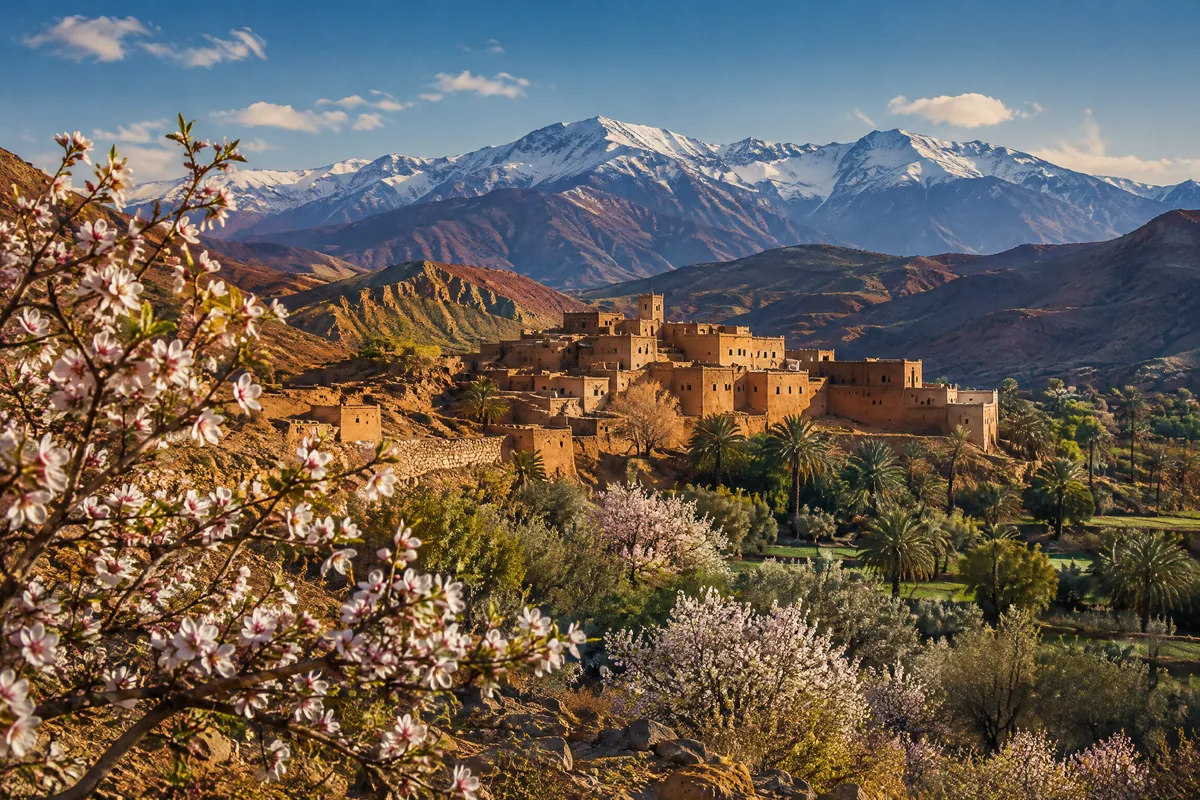
There is no single best month for every Morocco itinerary. An Atlantic beach break, a Marrakech city stay, a High Atlas trek and an overnight among Saharan dunes respond differently to the same calendar. Morocco’s position between the Atlantic, the Mediterranean, the Rif and Atlas ranges creates genuine regional contrasts, as the Moroccan National Tourist Office explains. Start with the places and pace you want, then choose a season whose trade-offs suit you rather than expect guaranteed weather.
Start with your route, not a national ‘best season’
For a first trip combining a city, mountain scenery and the south, late spring and early autumn are often the most balanced starting points. They can reduce the chance that Marrakech and the desert feel at their most intense while keeping many routes attractive. This is planning guidance, not a forecast: rain, wind, heat, snow and road conditions vary by year, elevation and region.
Morocco is not one climate zone. It has an Atlantic coast of more than 3,000 km and a Mediterranean shore, while the High Atlas separates Atlantic, Mediterranean and Saharan Morocco; Jbel Toubkal reaches 4,167 m, according to Visit Morocco’s geography overview. Pack layers and leave flexibility whenever you cross these landscapes.
Coast: the better summer refuge, with wind as part of the experience
Casablanca, Rabat, El Jadida, Essaouira, Taghazout and Agadir are not interchangeable, but Atlantic influence generally makes the coast a sensible choice when inland heat builds. The official tourism board highlights year-round coastal sunshine and describes Agadir as having mild temperatures and light breezes alongside about 300 sunny days annually; it also points visitors to Taghazout, Mogador (Essaouira) and Magazan/El Jadida (source).
June through August can work well for beach time, surf and a cooler-feeling alternative to Marrakech. The trade-off is wind, particularly around Essaouira and exposed Atlantic stretches, plus water that can feel cooler than expected. School holidays may change beach atmosphere and availability.
From November to March, coastal cities still make rewarding cultural stops, but bring a rain layer and do not plan every day around the beach. Spring and autumn are versatile for coastline walks, food and medinas, although showers and breezes can still reshape a day.
Marrakech: choose shoulder seasons for long days outside
Marrakech is inland, so its heat and cool evenings deserve their own decision. March to May and late September to November often offer the most comfortable compromise for the medina, gardens and nearby valleys, especially if you like full sightseeing days. They are popular windows too, so expect busy landmarks at peak moments.
Summer remains possible for travellers comfortable with heat and a deliberately slower rhythm. Schedule outdoor exploration soon after breakfast and later in the evening; keep midday for a shaded meal, hammam, museum or rest. Drink water and protect yourself from the sun. A summer link with the Atlantic coast is generally more realistic than pushing farther into the desert.
December to February can provide pleasant daylight but cooler nights and a greater possibility of wet spells. Bring a warm layer. For regional context, see Marrakech with Karama Travel, then choose activities after checking the short-range forecast.
Atlas Mountains: elevation, snow and route conditions matter more than the month
The Atlas is not a single temperature band. Valleys, trailheads, high passes and summits can have sharply different conditions on the same day. The High Atlas is Morocco’s highest mountain chain and divides climatic regions, while the Anti-Atlas is markedly arid because it lies close to Saharan lands (official geography).
For walking and village exploration, spring and autumn are frequently appealing because daytime warmth and mountain cold can be easier to manage. Spring snow may affect higher ground and changing weather can alter access; in autumn, nights cool quickly and darkness arrives earlier. In either season, bring layers, sturdy footwear and a route alternative.
Summer can be the logical mountain choice when lower areas are hot, but altitude does not remove sun exposure or afternoon-weather risk. Winter suits people specifically prepared for cold, possible snow and limited access. Confirm local road, guide and accommodation conditions shortly before departure.
Sahara: spring and autumn are the clearest regional recommendation
Plan the southern desert as a temperature-range experience, not simply a hot destination. The National Tourist Office explicitly identifies spring and autumn as the best times to venture into the Sahara (official climate guidance). They usually make dune walks, road transfers and sunset time more manageable than high summer, while still requiring sun protection, water and warm layers after dark.
Summer desert travel involves a serious heat trade-off. If it is non-negotiable, shorten outdoor activity, use early and late hours, and take professional local advice. In winter, daytime exploration can be appealing, yet desert nights can be genuinely cold; insulated layers and a warm sleeping arrangement matter. Wind and sand can affect comfort in any season.
Merzouga is one gateway to the Saharan expanse, where the official tourism site highlights dunes, hiking and bivouac experiences (destination overview). Explore Morocco Sahara routes for a route-led conversation, not a promise of identical conditions on every date.
Month by month: a practical trade-off calendar
January–February: favour Marrakech’s cultural side, lower-elevation sightseeing and daytime desert landscapes if you pack for cold nights. Expect winter variability, possible northern/coastal rain, and snow or limited mountain access.
March: a useful transition month for a mixed itinerary. Some areas may be greener and temperatures lift, but mountain snow, rain and desert wind can complicate plans. Keep a flexible day.
April–May: often the broadest fit for cities, many mountain approaches and the Sahara. Demand rises, inland afternoons warm, and high trails are not guaranteed snow-free.
June: the coast and higher country become more attractive if heat bothers you; Marrakech and the desert need a reduced schedule and early starts.
July–August: choose the Atlantic or selected higher-altitude plans first. Inland city and Sahara visits require heat-aware pacing, not a dense all-day itinerary.
September: conditions often begin to rebalance, although inland heat can linger. It is a useful coast-plus-mountains bridge; the south still needs heat planning.
October–November: another strong mixed-route window, especially for cities and the Sahara. The trade-offs are cooler evenings, earlier darkness and increasing rain risk in some northern or mountain locations.
December: consider cities, food, museums and desert daylight with warm nighttime gear. Treat high-mountain travel as a winter-specific plan.
Match the calendar to your travel style
For a first Morocco itinerary: April–May or October–November often suit a coast–Marrakech–south combination. Keep transfers realistic: topography can move you quickly between climates. Begin with Morocco travel ideas and decide which region deserves the most nights.
For beach, surf or a summer family break: focus on the coast and accept wind as part of Atlantic life. Put city visits in mornings or cooler periods rather than forcing a long inland loop.
For hiking: choose route, elevation and technical level first. Spring or autumn is a sensible starting hypothesis, then verify snow, trail access, guide advice and the forecast. Summer may suit some high routes; winter requires different preparation.
For photography, food and medinas: cooler months and shoulder seasons can make daytime walking easier. Rain can be a fair trade-off for softer light and quieter streets, but never guarantees empty landmarks.
For the desert: favour spring or autumn where dates allow. Winter is for travellers prepared for cold nights; summer is for those who knowingly accept intense heat and adapt activity hours.
FAQ: choosing the best time for Morocco
What is the best overall time to visit Morocco? For a multi-region holiday, spring and autumn are usually the most balanced starting point, especially April–May and October–November. They are not universally best: a July beach break and a winter city-and-desert trip can work well when planned for their conditions.
Is Morocco too hot in July and August? Inland areas and the Sahara can be very hot, particularly for all-day walking. The Atlantic coast and selected mountain areas are more logical choices, while Marrakech needs early/late scheduling, shade and hydration. This is a planning trade-off, not a ban.
Can I visit the Sahara in winter? Yes, if you prepare for cold nights and accept shorter, cooler days. Winter can be rewarding for daytime desert exploration; bring insulating layers and check current local conditions.
When should I go to the Atlas Mountains? It depends on elevation and activity. Spring and autumn often suit non-technical walks, summer can work at higher elevations, and winter calls for a cold- and snow-aware plan. Ask about your exact route rather than relying on a national summary.
How close to departure should I check weather? Check again in the final five days. The official visitor guidance notes that the Météo Maroc app provides five-day forecasts and real-time information for Moroccan cities (Visit Morocco); use it alongside local road or activity advice.
Karama Travel is a licensed Casablanca agency and can help turn a preferred season into a realistic regional route—without pretending weather is guaranteed. Share your dates, interests and comfort with heat, wind or cold through our contact page, and we can discuss the right pace for each region.