Honeymoon ·
Morocco Honeymoon Packages: How to Shape a Romantic Tailor-Made Itinerary
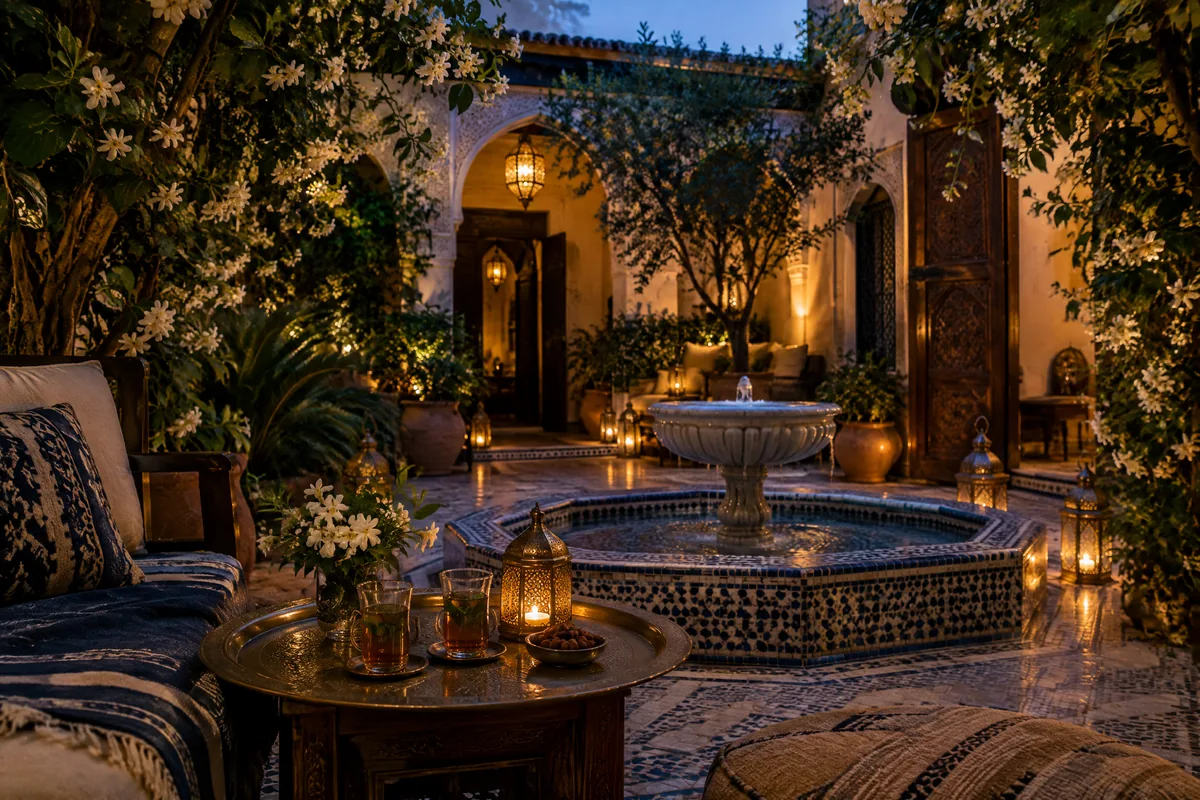
A Morocco honeymoon works best as a rhythm, not a checklist: lively city time, a quiet mountain pause, unhurried Atlantic air and, if the calendar allows, a desert night. Morocco brings together coast, mountain ranges and Saharan landscapes; the official guide describes the High Atlas and identifies Merzouga as a gateway to the Sahara Visit Morocco’s geography guide. Use that variety to create a personal route, not an exhausting itinerary.
Begin with the feeling, then choose the route
Before choosing properties or activities, agree on two or three priorities. One couple may want food, craft and the sensory life of a medina; another may value long breakfasts, open views and very little packing. Decide whether Marrakech is a lively opening act or the main event, whether the coast means restorative downtime or a base for gentle exploration, and whether the desert is essential or simply tempting.
Keep the route geographically honest. Marrakech, a High Atlas stay and then Essaouira is a coherent sequence of city, elevation and coast. Marrakech itself combines medina, Jemaa El-Fna, gardens and newer districts Visit Morocco: Marrakech, so experience a few well rather than race through all. The coast is a counterpoint, not an obligation: the Atlantic shoreline includes Essaouira, Casablanca and Agadir Visit Morocco: geography.
How many nights create a honeymoon pace?
For a first Morocco honeymoon, seven nights can feel complete if you limit the route to Marrakech, the Atlas and the coast. A useful shape is three nights in Marrakech, two nights in or near the mountains, and two nights by the Atlantic. It leaves room for arrival fatigue, a slow morning and one unscheduled afternoon. It is not a promise that every transfer will be short; ask for the actual route and estimated door-to-door timing before confirming.
With nine or ten nights, add a third coastal night or keep a final night in Marrakech before departure. That extra space is often more romantic than adding another city: it protects a long lunch, a hammam visit, a swim if the chosen stay has one, or simply reading without a checkout deadline. For twelve nights or more, a desert segment can fit without making the rest of the trip feel like a transit itinerary. Build in recovery time after long road days.
Let Marrakech set the tone—without filling every hour
Marrakech can be the beginning, the finale or both. Plan one orientation walk with a licensed local guide if you value context and easier navigation, then leave another period for following your own interests. The medina’s lanes reward curiosity, but a loose plan is better than an all-day checklist. Balance a market or architectural visit with a garden, a terrace or time at your accommodation.
Ask for experiences rather than “romantic extras.” A private cooking session, a quieter museum visit, a garden-focused afternoon or a booked table may suit you; the right choice depends on your interests and on what is actually available on your dates. Mention mobility needs, food preferences and your comfort with crowds. Do not assume that a riad, a rooftop or a spa is private merely because it sounds intimate—verify its layout and service terms.
Pair the Atlas with the Atlantic coast
The Atlas is where many couples slow down. Morocco’s official guide says the High Atlas runs about 750 kilometres, separates Atlantic, Mediterranean and Saharan regions, and includes Jbel Toubkal at 4,167 metres Visit Morocco: High Atlas. Name the exact valley or area in your brief, then choose an easy scenic stay, village walk, active hike or view-led retreat for your fitness and season.
Then switch to the coast for a different kind of rest. Essaouira is a natural option for couples who enjoy a compact historic setting and sea air, while a southern Atlantic choice may suit a beach-focused itinerary. The national tourism office says coastal areas receive sunshine across the year and highlights Agadir, Taghazout and Mogador/Essaouira among Atlantic destinations Visit Morocco: climate and seasons. Coastal weather can still be breezy or variable, so request the seasonal reality for your exact dates rather than treating “beach” as a guarantee.
Make the desert an intentional, optional chapter
A desert night can be memorable, but it is not a quick detour from Marrakech. Treat it as a dedicated segment with substantial road time on either side, and reserve at least three nights in the wider itinerary if you want the desert without compressing the rest. Merzouga is one recognised doorway to the Sahara, and the official tourism guide describes dunes, bivouac stays and sunrise or sunset landscapes there Visit Morocco: Merzouga.
Ask what “desert camp” means in the proposal: access, private tent or shared site, heating or cooling, en-suite bathrooms, luggage handling and the weather contingency. If the answers make the segment feel rushed, give more time to the Atlas or coast. Skipping the desert is a design choice, not a lesser honeymoon.
Match the season to your preferred version of Morocco
Spring and autumn are especially sensible starting points for couples hoping to combine cities, mountains and the desert. The official tourism office specifically identifies spring and autumn as the best times to venture into the Sahara, while it describes sunshine throughout the year on the coast Visit Morocco: climate and seasons. They are planning cues, not a weather guarantee: ask about conditions shortly before travel.
In summer, give the coast more weight and plan outdoor city time early or late. In winter, favour atmosphere over pool expectations, pack layers for altitude and desert areas, and allow for weather changes. Ramadan and holidays can alter meal and opening rhythms; discuss them as a cultural consideration. For entry rules, check nationality-specific requirements through the Moroccan Ministry of Foreign Affairs visa information and its official portal, not an old blog post.
Turn “privacy” into questions a planner can answer
Privacy is not a room category. It is the combined result of location, layout, staffing, transport and timing. Tell your planner what privacy means to you: no shared excursions, a quiet room, a secluded terrace, discreet celebrations, a private pool, limited photography, or simply no surprise group meals. Then ask precise questions before you commit.
Ask whether the room is near reception, a restaurant or public terrace; whether its outdoor space is overlooked; and whether its balcony, pool or dining area is exclusive. Ask about adjoining doors, service traffic and typical noise. If an experience is “private,” does that mean vehicle, guide, activity or all three? Clarify the setting for a special meal and whether decoration or a photographer is separate.
For transfers, request pickup times, likely stops, vehicle type, luggage capacity and who will be aboard. A “private transfer” should be defined in writing. Share allergies, alcohol preferences, dress comfort, mobility, languages and your preferred degree of staff interaction. These questions protect the trip’s tone without seeking promises no provider controls.
Send a bespoke-quote brief that produces useful options
A good enquiry gives a planner enough information to design, not just to sell. State your exact or flexible dates, number of nights, arrival and departure cities, passport nationalities, approximate comfort level, and an overall budget range you are comfortable discussing. Share whether you prefer one exceptional base or several contrasting stays, and whether you want a room, suite, tented camp or villa-style setting without presuming availability.
Separate non-negotiables from wishes. The first might include private transport, a ground-floor room, vegetarian meals or no more than two transit-heavy days; the second a hammam, easy hike, market, ocean time or desert sunrise. Ask for nights by place, named inclusions and exclusions, transfer assumptions, alternatives, payment and cancellation terms, and availability conditions. Confirm visa and document obligations with official authorities; the foreign ministry directs visitors to its official visa requirements channel.
FAQ: planning a Morocco honeymoon
Is seven nights enough for a Morocco honeymoon?
Yes, if you choose three complementary stops rather than trying to cross the country. Marrakech, one Atlas area and the Atlantic coast give contrast with a manageable packing rhythm. A desert overnight usually deserves more time; otherwise it can dominate the journey with road hours.
Should we include the Sahara on a first trip?
Include it if the desert experience matters more to you than having extra unstructured time, and if you can allocate a dedicated segment. Skip it if you dislike long drives, want a lower-carbon or lower-transit route, or have only a week. The Atlas and coast can deliver a deeply romantic itinerary on their own.
Which season is best for a Marrakech–Atlas–coast–desert route?
Spring or autumn is a strong starting point for this broad combination because the official tourism authority recommends those seasons for the Sahara. Your final choice should reflect your tolerance for heat, wind, cool evenings, crowds and the exact activities you want. Recheck local conditions as departure approaches.
How do we check that accommodation is truly private?
Request a written description of the room’s placement, all exclusive outdoor areas, who shares facilities, and the exact definition of any “private” meal, transfer or activity. Photos are useful, but they do not answer noise, sightlines, staffing or event use. Ask what alternative room or property is available if that level of privacy cannot be confirmed.
Ready to shape the route? Explore Karama Travel’s honeymoon planning service, use the Morocco guide to refine your interests, then send your dates, pace and privacy priorities through Contact. Karama Travel is a licensed Casablanca agency; a tailored conversation is the right place to confirm current availability, routing and the terms of any proposal.