Itineraries ·
Morocco Itinerary: 7 Days from Casablanca to Rabat, Fez and Marrakech
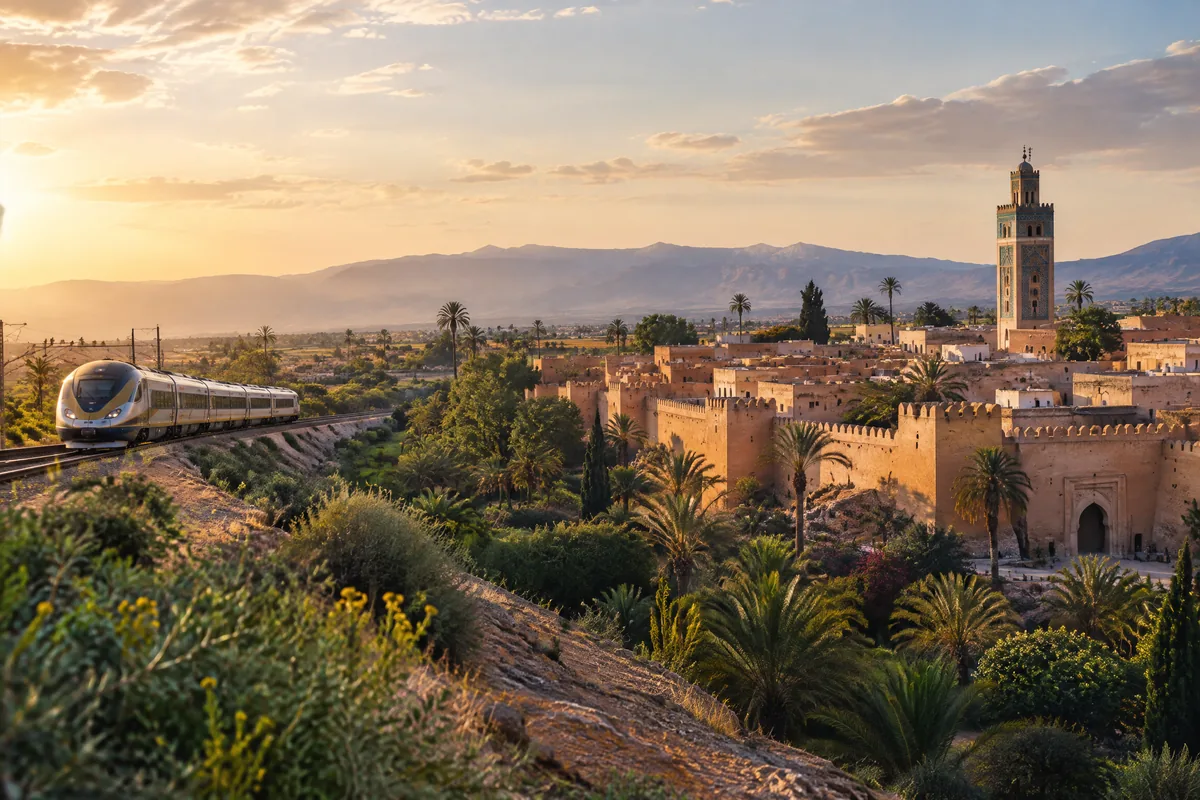
This seven-day Morocco itinerary from Casablanca is for travellers who want the imperial cities without turning every day into a transfer. Its deliberately concise route is Casablanca → Rabat → Fez → Marrakech, with two nights in Fez and two in Marrakech. It follows a sensible rail corridor between major cities and leaves room to walk, get oriented and rest. Start mapping the trip with Karama Travel’s Morocco guide and imperial cities guide.
Why this is the realistic seven-day route
The route moves in one direction: Casablanca on the Atlantic, Rabat on the same axis, inland Fez, then Marrakech to the south. Allow about one hour from Casablanca to Rabat; Rabat to Fez is commonly about 2 hours 45 minutes to 3 hours 15 minutes on a direct train; Fez to Marrakech deserves a full travel day—roughly 6 hours 30 minutes to 7 hours 30 minutes on a direct train, or about 7–8 hours by car with breaks. These are planning estimates, not guaranteed timetables: check live departures and book before travelling.
The payoff is a coastal arrival city, the political capital, a deep historic medina and Marrakech. This plan does not add both Chefchaouen and Merzouga to one week. Doing so creates punishing driving days or reduces Fez and Marrakech to brief photo stops. Morocco’s official tourism site lists Casablanca, Rabat, Fez and Marrakech among its destinations, making them a coherent, focused first trip.
Days 1–2: Casablanca, then Rabat
Day 1: arrive in Casablanca and ease into Morocco
After landing at Mohammed V Airport, leave realistic time for arrival formalities, bags and the trip into town before scheduling anything ambitious. If you arrive early, take a Corniche walk or look around Place Mohammed V, then have dinner near where you are staying. If you arrive late, make this a rest-only day; trying to squeeze Rabat into an arrival day is false economy.
The following morning is a better time for Hassan II Mosque, within the visitor-accessible tour and available time slot. The Hassan II Mosque Foundation says visits are guided and asks visitors to cover shoulders and knees and remove shoes inside. Hours and conditions can change, so confirm them directly before going.
Day 2: see Rabat at an unhurried pace and stay overnight
Travel to Rabat in the morning by train or private driver. Drop bags first, then walk the Kasbah of the Udayas, the medina and the Bouregreg waterfront at your own speed. Keep the afternoon for the Hassan Tower and Mohammed V Mausoleum area, subject to current access. A short taxi is useful between the kasbah and Hassan complex.
Rabat is more than a stop between stations. UNESCO’s listing describes a shared heritage where the Protectorate-era new town meets much older fabric, including the Hassan Mosque, Almohad ramparts and gates. Rather than attempting a long checklist, choose the kasbah, the Hassan area and one quiet café or museum that matches your interests. Sleeping in Rabat makes the following day far lighter.
Days 3–4: Fez, from arrival to exploration
Day 3: Rabat to Fez, followed by a gentle first look
Take the train or road to Fez in the morning. After checking in, do not launch straight into a long maze-like walk. Take a short orientation outing in Fes el-Jdid, see gates and walls from outside, or go to a viewpoint before sunset if timing allows.
Arrange a clear next-day meeting point with your accommodation, remember the neighbourhood name and keep a useful phone number. Fes el-Bali is a walking city, but its lanes are not the ideal place to arrive tired with suitcases. Have dinner close to your riad or hotel and save energy for the full exploration day ahead.
Day 4: explore Fes el-Bali at a human scale
Start early with a licensed local guide if you want context for the neighbourhoods and crafts, or follow a short route among historic schools, souks and small squares. Do not try to “do all of Fez.” Give attention to lanes, neighbourhood fountains, working crafts and views across the city, with a lunch break away from the busiest arteries. Entry to some religious institutions is limited to worshippers; follow the signs and treat a closed doorway as part of respectful travel, not a failed visit.
UNESCO’s Medina of Fez page says Fez was founded in the ninth century, that much of the medina’s urban fabric and principal monuments date to its Marinid high point, and that it is among the best-preserved historic towns of the Arab-Muslim world. That is exactly why slower is better: a tea break, one thoughtfully chosen artisan visit and time back at the riad beat chasing ten photo stops. For an even gentler pace, divide Fez between morning and afternoon instead of adding Meknes today.
Day 5: Fez to Marrakech is a travel day, not a sightseeing day
This is the longest transfer in the itinerary, so reserve an early direct train if one suits your dates, or use a private vehicle if your group values flexible stops. Once in Marrakech, drop your bags, have dinner near the accommodation and keep any stroll around Jemaa el-Fna strictly optional.
The trade-off is straightforward: a car offers door-to-door flexibility but remains a real road day. Do not layer gardens, hammam time, shopping and a reservation across distant neighbourhoods on this evening. If the transfer feels too heavy, omit Rabat and go from Casablanca to Fez; you gain time but lose an important capital-city perspective and much of the route’s balance.
Days 6–7: Marrakech, then departure
Day 6: Marrakech’s medina without rushing it
Use the morning for the medina, then rest around midday if heat or crowds rise. In the evening, choose Jemaa el-Fna and the Koutoubia area, or a quieter restaurant away from the square. Use the Marrakech guide to decide which stops matter most to you.
UNESCO’s Medina of Marrakesh listing includes the Koutoubia, ramparts and gardens as well as later sites such as El Badi Palace, Ben Youssef Madrasa and the Saadian Tombs; it calls Jemaa el-Fna an open-air theatre. That does not mean compressing everything into a few hours. Pick only two or three interior sites around their opening times, then reserve the rest for wandering, observing and sitting down.
Day 7: Marrakech, then departure—or add a night
With a late flight from Marrakech, use the morning for one final purchase from an artisan whose work you understand, a calm visit or a long breakfast. Leave time for traffic between the medina and airport and for luggage arrangements. If your flight home departs from Casablanca, do not conceal the Marrakech–Casablanca transfer inside a tight flying day: take a very early train with a generous buffer, or add an eighth night in Casablanca.
The itinerary intentionally ends in Marrakech. An open-jaw ticket—arrive in Casablanca, depart from Marrakech—is the cleanest seven-day solution. A Casablanca return ticket can work, but it requires accepting a final long transfer or extra night.
One optional alternative: Chefchaouen instead of Marrakech
If Rif scenery and Chefchaouen’s blue lanes matter more to you than Marrakech, replace the last three days with Fez → Chefchaouen (around 4–5 hours by road or an appropriate bus, depending on service) → Casablanca (around 5–6 hours by road, or via Tangier/Rabat with connections). Day 5 becomes the transfer to Chefchaouen, day 6 is there, and day 7 is the return toward Casablanca or a later departure. Do not add it on top of the core route and Marrakech; the itinerary will zigzag and consume its own sightseeing time.
Likewise, save Merzouga for at least 9–10 days, or for a Fez-to-Marrakech route that includes two road nights dedicated to the desert. UNESCO’s Volubilis listing records it as an important Mauritanian and Roman archaeological site, not a quick roadside pause. That is the honest trade-off: fewer places and deeper time, or more variety and more transport.
Frequently asked questions
Are seven days enough for Casablanca, Rabat, Fez and Marrakech?
Yes, if day 1 is your arrival day, you depart from Marrakech and you treat day 5 as a true transfer day. It is enough for a strong first visit, not enough to add both the Sahara and Chefchaouen comfortably.
Do I need a private car?
No. Trains are useful between the main cities on this route, while walking and short taxis usually work in town. A private car helps travellers who want flexible stops, are with children or carry substantial luggage; it does not make Fez–Marrakech short.
Can I enter mosques?
Access depends on the place, current opening arrangements and religious practice. Hassan II Mosque has visitor tours under the Foundation’s guidance; in the medinas, follow each site’s rules and respect active places of worship.
Plan a sensible week with Karama Travel
Want the week to remain workable from touchdown onward? Karama Travel, a licensed Casablanca agency, can help coordinate an itinerary around your timings and pace with transport and lodging options tailored to your needs. Share your arrival and departure cities, party size, train-versus-car preference and cultural interests through the contact page or at +212704402200. Begin with Morocco and the imperial cities, then decide what genuinely deserves your time.